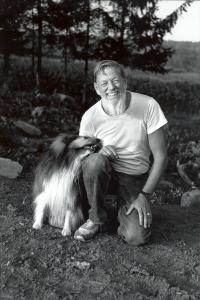
Getting published : advices by P. Smith
Those two articles by Peter Smith (Cambridge University, former editor of Analysis) are very useful : Getting Published and
Developing a writing style
Those two articles by Peter Smith (Cambridge University, former editor of Analysis) are very useful : Getting Published and
Developing a writing style
1,2,3,6,11,23,47,106,235 reminds you of something, but can't say what exactly ?
Wish to hear the sound of a Fibonacchi sequence ?
The On-Line Encyclopedia of Integer Sequences may help you and do much more.
[h.t. Nicolas le Thierry d'Ennequin]
 Catégorie:
software
Catégorie:
software
Professor of Philosophy and Computer Science (Rochester University) Henry E. Kyburg dies. Obituary.
Catégorie:
In Memoriam
An user-friendly introduction to subsystems of PA2. Peter Smith : On Some Subsystems of Second-Order Arithmetic
Conference, 9th to the 11th of November, 2007. Information, program etc., here.
Catégorie:
conferences
Here is useful survey by Michael Rathjen : The art of ordinal analysis.
[via Logic Matters]
Catégorie:
Intext
AiML-2008 ♥ ADVANCES in MODAL LOGIC ♥ http://aiml08.loria.fr
9-12 September 2008, LORIA, Nancy, France
invites submission of short or long papers on various aspects of modal logic, its applications, its history, philosophy etc.
DEADLINE: 31 March 2008
Catégorie:
conferences
Paradoxes and contemporary logic is a new SEP entry, written by A. Cantini.
The is also a new entry on Philosophy of mathematics by L. Horsten, one on Frege-Hilbert Controversy by P. Blanchette and one on Bolzano's logic by J. Sebestik.
Catégorie:
Intext
Lundi 29 octobre, à 17h30 dans la grande salle de l'IHPST, le séminaire Philmath reçoit Francesco Berto (IHPST-CNRS-ENS):
Abstract:
Some of the strangest outcomes of paraconsistency have to do with inconsistent arithmetic and impossible numbers. Traditional-minded logicians usually get puzzled when one mentions the astonishing applications of paraconsistency in formal arithmetic. However, at the cost of some incredulous stares (which usually begin when one mentions the fact that paraconsistent arithmetics include contradictory numbers, and especially numbers which are identical to their immediate successor), one gets a world in which even well-established limitative results of ordinary metamathematics, such as Gödel’s Theorems, begin to fluctuate. In this talk I summarize some of the main results around, which are as unfamiliar to the general audience as they are innovative and interesting. The presentation is focused on *relevant* arithmetics, i.e., on formal systems for arithmetic whose underlying logic is some relevantlogic. After giving bits of relevant proof theory, I switch to a model-theoretic approach (which I find philosophically much more stimulating). I introduce a useful *collapsing filter*, which turns the so-called standard model of arithmetic into interesting inconsistent models by shrinking in an appropriate way its cardinality.
Catégorie:
Philmath
Philform reçoit Vincent Hendricks (Roskilde University, Denmark) le lundi 22 octobre de 14h à 16h dans la grande salle de l'IHPST.
Limiting Skepticism
Abstract/ Modal operator epistemology is a formal epistemological paradigm obtained by mixng modal, tense and epistemic logic with rudimentary elements from formal learning theory. The paradigm was developed in The Convergence of Scientific Knowledge (Springer: 2001) and used there and elsewhere to study the validity of limiting convergent knowledge(Mainstream and Formal Epistemology (Cambridge UniversityPress, 2006)).Studying knowledge is also studying skepticism. Skepticism is usually considered to being a short-run strategy. Using modal operator epistemology this paper scrutinizes what happens to skepticism in the long run: Can skepticism outstrip knowledge in the limit?
Catégorie:
Philform
IHPST, lundi 15 octobre 2007, Grande Salle
Organisé par Mikaël Cozic (IHPST/GREGHEC) et Philippe Mongin (GREGHEC/IHPST)
Programme :
14h30-15h30 : D. Hausman (University of Wisconsin, Madison), “Explaining by Citing Causes ”
15h30-16h30 : I. Drouet (IHPST), “Utiliser les réseaux bayésiens pour inférer des causes”
16h30-17h30 : Ph. Huneman (IHPST), titre à venir
Catégorie:
conferences
Archives of the famous journal Fundamenta Mathematicae are available online free.
[via LogBlog]
Catégorie:
Intext
Joe Salerno has given a talk at Philform seminar yesterday, on "Counterpossible Conditionals"
ABSTRACT: Subjunctive conditionals with impossible antecedents (or counterpossibles) are standardly treated as vacuously true---the classical lore being that if an impossibility were to obtain, then anything would be the case. We'll discuss and develop a non-vacuous reading for (some) counterpossibles. The account provides resources for capturing some illusive philosophical notions---including the intuitive difference between essence and necessity, and an intuitive account of epistemic possibility.
Catégorie:
Philform
Cedric Paternotte soutient sa thèse ce samedi 29 septembre 2007, en Sorbonne, Salle Durosselle.
Titre de la thèse : « Coopération et actions collectives ».
M. Jacques Dubucs : Directeur de Recherche à l’IHPST (CNRS/Paris1/ENS), Directeur de l’IHPST.
Jury :
Marc Fleurbaey (Directeur de Recherche au Centre de Recherche Sens, Ethique, Société (CERSES)), Pierre Livet (Professeur à l’Université de Provence Aix-Marseille I), Thierry Martin (Professeur à l’Université de Franche-Comté), Raimo Tuomela (Professeur à l’Université de Helsinki), Bernard Walliser (Professeur à l’Ecole Nationale des Ponts et Chaussées, Directeur d’Etudes à l’Ecole des Hautes Etudes en Sciences Sociales).
Résumé : Pour que l'on puisse dire que des individus ont coopéré, quels doivent être leurs états mentaux et leurs relations, quelles actions doivent-ils accomplir ? Et comment expliquer qu'ils choisissent de coopérer au prix de certains risques ? Ces deux questions de définition et d'explication, bien qu'au centre des théories de la coopération humaine, sont traditionnellement traitées de façon indépendante. Ce travail se propose de concilier ces deux aspects par l'étude d'une forme cruciale de coopération minimale dans un cadre unifié mobilisant notamment des outils de théorie des jeux. L'analyse détaillée des concepts fondamentaux liés à la coopération (objectifs collectifs et connaissance commune), alliée à l'élaboration d'une explication rationnelle et cognitivement réaliste du comportement coopératif dans des contextes stratégiques statique et dynamique (à partir des notions-clés d'identification et de perception de groupe), mènent ainsi à une définition cohérente éclairant la nature de ce phénomène.
Abstract :
To be able to say that people have cooperated, what do their mental states and relations need to be, what actions must they accomplish ? And how can the fact that they choose to cooperate in risky situations be explained ?
Although these two questions about definition and explanation form the core of the theories of human cooperation, they are usually answered independantly. This dissertation aims at reconciling these two aspects by studying a crucial form of minimal cooperation in a unified framework including game theoretic tools. The detailed analysis of fundamental concepts
underlying cooperation (collective goals and common knowledge), combined with the crafting of a rational and realistic explanation of cooperative behavior in static and dynamic strategic
contexts (based on the key notions of group identification and group perception), thus lead to a coherent definition that shed light on the nature of cooperation.
La soutenance sera suivie d’un pot.
Catégorie:
People
Le séminaire Philform reprend (lieu et horaire habituels). Lundi 24 septembre de 14h à 16h Eric Martin (Department of Artificial Intelligence School of Computer Science and Engineering University of New South Wales)parlera présentera un exposé intitulé : "Logique déductive et logique inductive, une généralisation".
Catégorie:
Philform
The SEP has a new entry on The logic of conditionals, written by Horacio Arlo-Costa.
Catégorie:
Intext

|

|

|

|